How much water does it actually take to get a boat from a private dock in Jupiter Inlet Colony to the Atlantic? Ask that question of five different people and you will get five different answers, because the honest one depends on the tide you leave on, the month you ask, and how recently the inlet has been dredged.
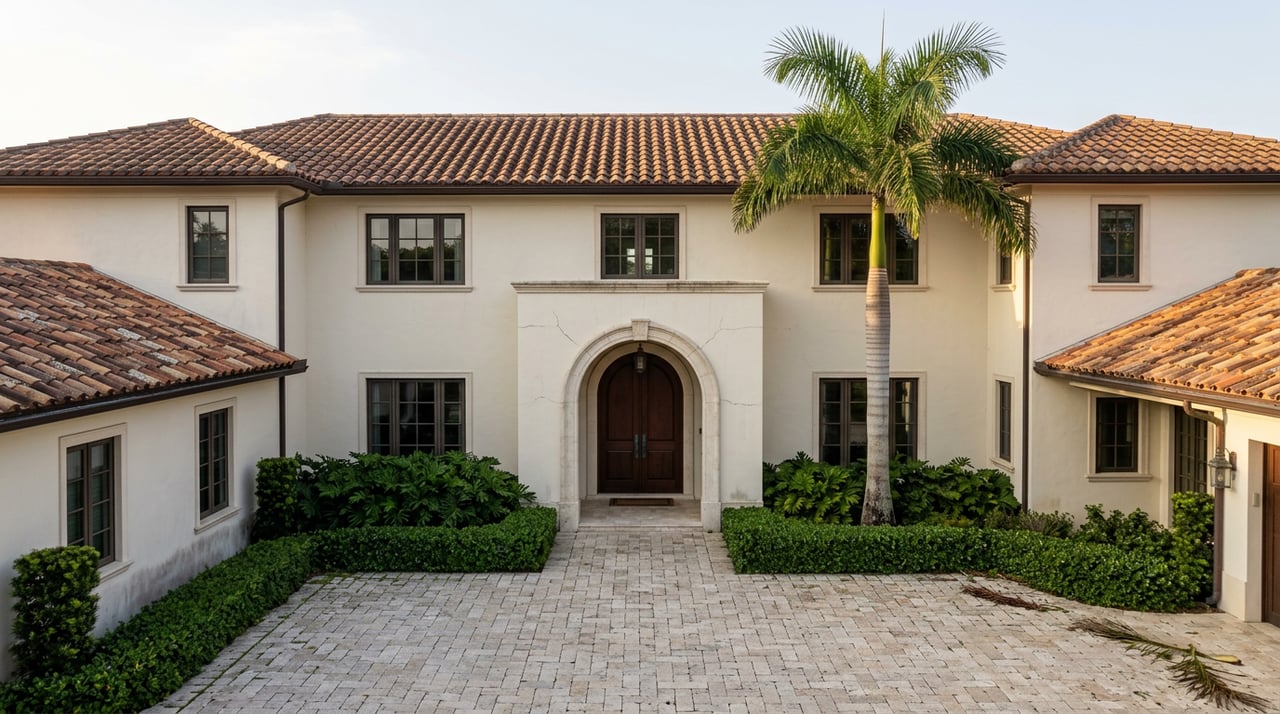
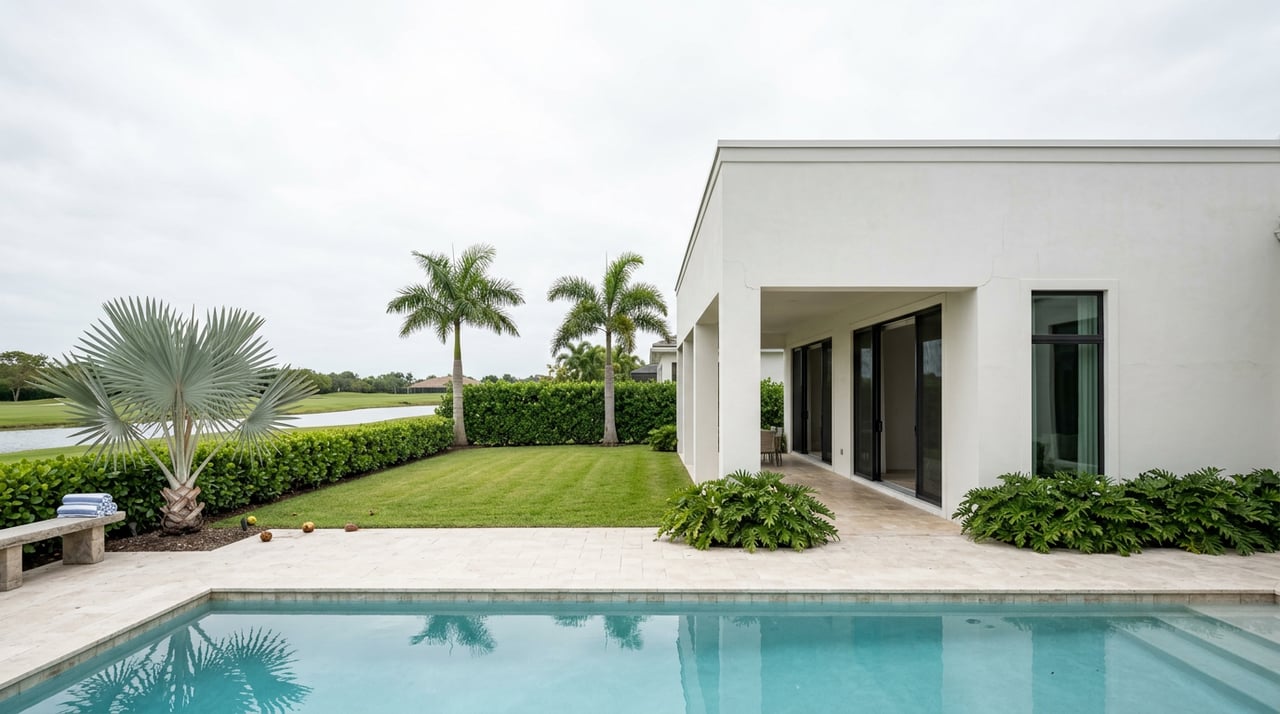
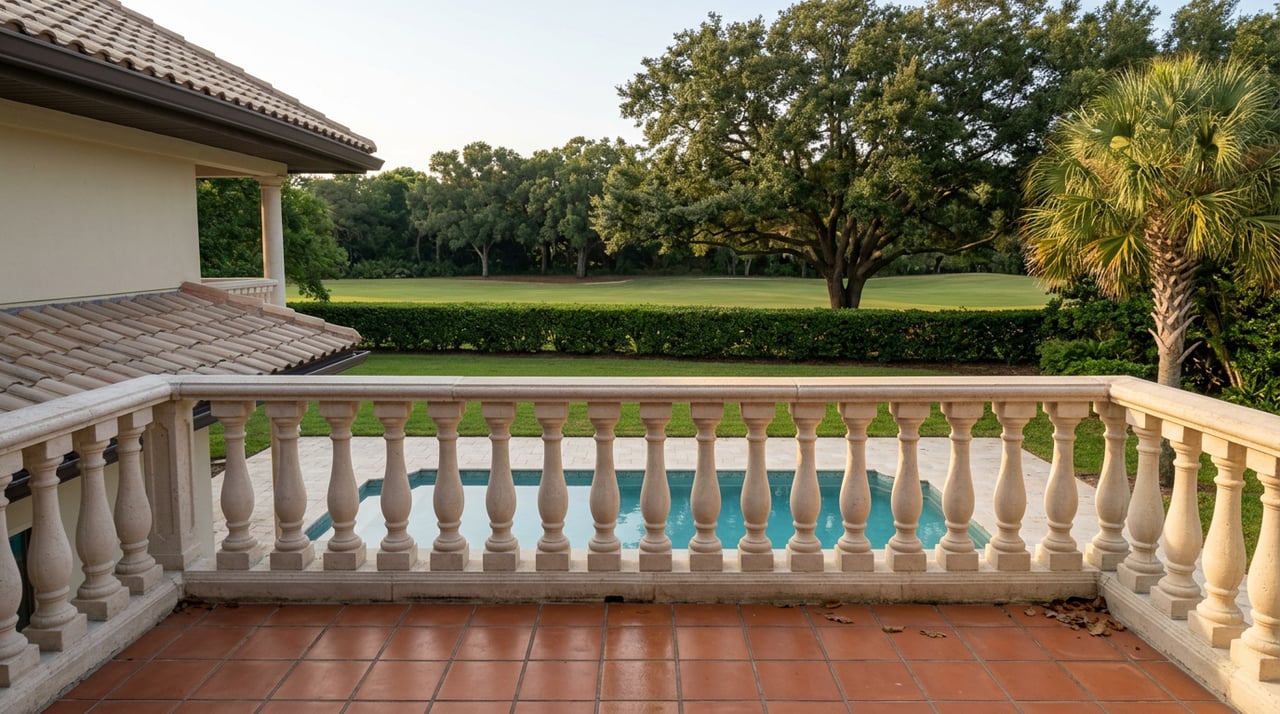
That is the detail the listing photos never show. Jupiter Inlet Colony sits on the southern tip of Jupiter Island with the Atlantic Ocean, the Jupiter Inlet, and the Intracoastal Waterway wrapped around roughly 236 single-family homes on eight streets. It reads on paper like the closest thing to a guarantee of frictionless boating that Palm Beach County offers. But the inlet itself is a natural, actively managed tidal channel, not a fixed piece of infrastructure, and the town built around it runs its own small, granular permitting process for anything that touches the water. Buyers who price "surrounded by water" as a settled amenity are skipping the diligence that actually determines what that water is worth to them.
The Inlet Is a Working Channel, Not a Fixed Asset
Jupiter Inlet has been shifting and shoaling since before anyone kept records of it. The Florida Legislature created the Jupiter Inlet District back in 1921 specifically because the natural channel would not stay open on its own, and the district has been dredging it in some form ever since. The most recent round, the 2026 Jupiter Inlet Sand Trap Dredging and Beach Nourishment Project, pulled roughly 176,000 cubic yards of sand from a 6.58-acre trap west of the inlet mouth and finished on April 26, 2026, with the material pumped south to nourish the beach and keep the passage clear.
That project matters because the alternative, doing nothing, has a documented cost. Boating publications tracking the Intracoastal crossing near the inlet flagged critical shoaling through 2025, with depth readings at one marker dropping from 8.8 feet to 6.2 feet at mean low water and two boats running aground there on July 5, 2025, in a five-foot draft with only a foot of tide to work with. Recreational boaters discussing the inlet on maritime forums describe it as something you can run confidently only if you already know it, and as genuinely risky on an outgoing tide. Local charter captains transit it daily without issue. First-time buyers with a new center console and a listing sheet that says "no fixed bridges" are working with a different margin for error.
The U.S. Coast Pilot, the federal government's own navigational reference, still characterizes Jupiter Inlet as a channel primarily used by small vessels of the local fishing fleet, marked by private lights rather than a full federal aid-to-navigation system. That is not a knock on the community. It is a reminder that "deep-water access" at this address is a condition to verify at the specific dock you are buying, not a blanket feature of the zip code.
What the Town's Own Permit Code Tells You
Jupiter Inlet Colony is not gated, and it runs its own municipal government rather than deferring entirely to the county. That means the town's Building and Zoning Department reviews new construction and major renovation directly, with permit categories that specifically name seawalls, docks, rip rap, decks, and beach crossovers as their own line items, separate from a standard building permit.
The practical difference shows up in time and money. A standard site in the town typically moves through permitting in two to four months. Waterfront work, because it triggers environmental review on top of the town's own process, more commonly runs three to five months, and pile foundations or seawall reconstruction add further time on top of that. Custom construction here is generally quoted in the $500 to $800-plus per square foot range once elevation requirements and marine-grade materials are factored in, and a full custom build typically runs eighteen to twenty-four months from design through completion. Two seasonal constraints compound the schedule further: hurricane season, June through November, regularly pauses exterior work, and sea turtle nesting season, March 1 through October 31, can restrict activity on beach-facing sites.
| Standard interior lot | Waterfront or beachfront lot | |
|---|---|---|
| Typical permitting window | 2 to 4 months | 3 to 5 months |
| Reviewing bodies | Town Building & Zoning | Town Building & Zoning plus federal, state, and county environmental review |
| Construction valuation assumption | Standard new-build rate | Runs comparable, but seawall, dock, and elevated foundation work adds cost |
| Seasonal constraints | Hurricane season pauses exterior work | Hurricane season plus sea turtle nesting season (March 1 to October 31) |
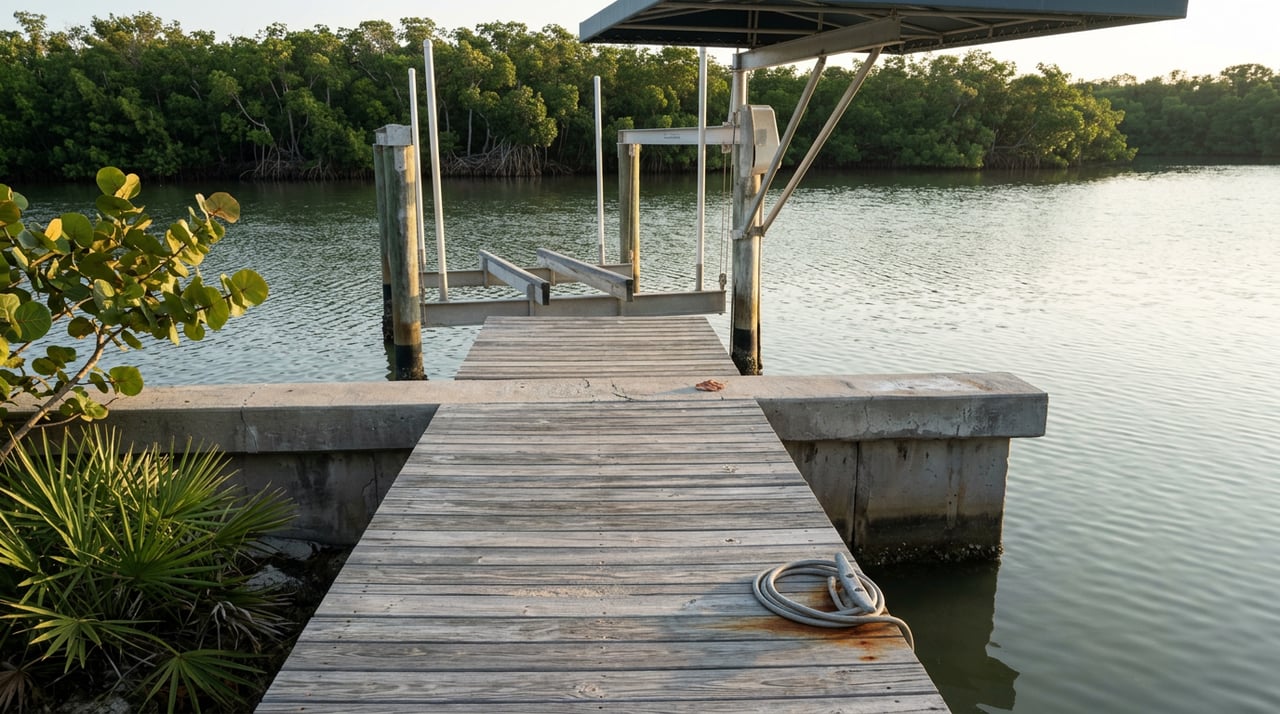
Any dock or seawall project also answers to more than one agency at once. The U.S. Army Corps of Engineers has jurisdiction over structures in navigable waters and any dredge or fill work, the Florida Department of Environmental Protection manages authorizations for the submerged land itself, and the Florida Fish and Wildlife Conservation Commission can add manatee-related conditions before the town even weighs in. A buyer evaluating a property with an aging dock is really evaluating a stack of approvals, not a single line item.
A Town Small Enough to Watch Its Own Seawalls
The scale of the town is what makes this permitting picture concrete rather than abstract. Jupiter Inlet Colony had a population of 405 at the 2020 census and covers about two-tenths of a square mile of land. It has its own police department, which logged 322 documented service activities in June 2026 alone, including 182 walkover checks and consistent construction-site monitoring, a level of attention only possible in a town this size.
The town commission meets on the second Monday of each month, and its published minutes read less like policy and more like a homeowners' meeting with legal authority attached. At the February 9, 2026 meeting, commissioners discussed a $38,000 proposal to build stairs at the north walkway beach access after the contractor handling seawall work could not take on the project, funding it out of savings and budgeted road money, and passed it five to zero. At the July 13, 2026 meeting, the commission set the proposed maximum millage rate for fiscal year 2026-2027 at 5.560 mills and reconfirmed a $3,300 annual non-ad-valorem assessment tied to a 2016 sanitary sewer and drainage upgrade, a fixed charge running through 2031 that shows up on every property tax bill regardless of a home's individual dock or seawall condition.
None of that is dramatic on its own. Together it means that a buyer here is not just underwriting a house. They are underwriting participation in a town small enough that a single contractor's availability shows up in the public record, and a single infrastructure assessment applies uniformly to every parcel.
The Diligence List Before You Write an Offer
For a property in Jupiter Inlet Colony, or any Jupiter-area address marketed on its water access, a few questions belong on the inspection contingency list before the standard ones:
- Request the permit history for the dock, seawall, and any rip rap on the specific parcel, not the neighborhood in general
- Ask for recent soundings at mean low water along the actual route from the dock to the inlet, not a project depth from years ago
- Confirm which of the town, county, state, and federal reviewing bodies would need to sign off on any dock repair or seawall replacement you are likely to need
- Time a site visit to observe the inlet at both flood and ebb tide before assuming a given vessel and draft will clear it comfortably
- Ask whether the seller has budgeted for or already paid into any town assessment tied to shared infrastructure, separate from the standard property tax bill
None of this changes the appeal of a town where residents can walk to the beach and step onto a boat from their own backyard. It changes what "appeal" is worth in dollars, because the inlet and the town's own code are the two variables that actually govern how easily that lifestyle translates into daily use.
A Few Direct Questions
Is Jupiter Inlet Colony gated? No. It is an incorporated town with its own police department and zoning authority, but there is no gate at the entrance.
Do all homes in Jupiter Inlet Colony have private docks? No. The town's stock ranges from interior lots without water frontage to oceanfront and Intracoastal estates with private dockage, so dock access depends on the specific parcel rather than being a blanket feature of the address.
How often does the inlet get dredged? On an as-needed cycle managed by the Jupiter Inlet District, with the most recent sand-trap project completed in April 2026. Shoaling can return between projects, which is why a fresh sounding at the time of purchase matters more than a general reputation for deep water.
If you are weighing a purchase in Jupiter Inlet Colony against another Jupiter-area waterfront address, the conversation worth having is not about the view. It is about what a specific dock, at a specific tide, in a specific permitting queue, will actually let you do. Brad and Shannon Ball work these waterfront diligence questions daily across Jupiter's canal, inlet, and oceanfront communities. Get a Free Home Valuation to start that conversation with the details that matter for your particular stretch of water.